


Certifications
Certifications
MASCOT workwear and safety footwear are tested and certified to a wide range of international standards, because different tasks and trades call for different levels of protection. The overview below explains each certification and the requirements behind it, so you can choose the right workwear for the job.
Workwear
MASCOT workwear is certified to demanding international standards. Here you can find out more about the different certifications and make sure you have the right workwear for the right working conditions.
EN ISO 20471 - High-visibility clothing
EN ISO 20471 is an internationally recognised standard that sets requirements for high-visibility clothing for people who work near traffic or other vehicles and machinery. The clothing is divided into three classes, with class 3 providing the highest visibility and therefore the best protection. Users should choose workwear based on the level of visibility they need. A product's class is determined by the visibility requirement, and therefore by the required area of reflective and fluorescent material.
EN 17353 - Enhanced visibility clothing
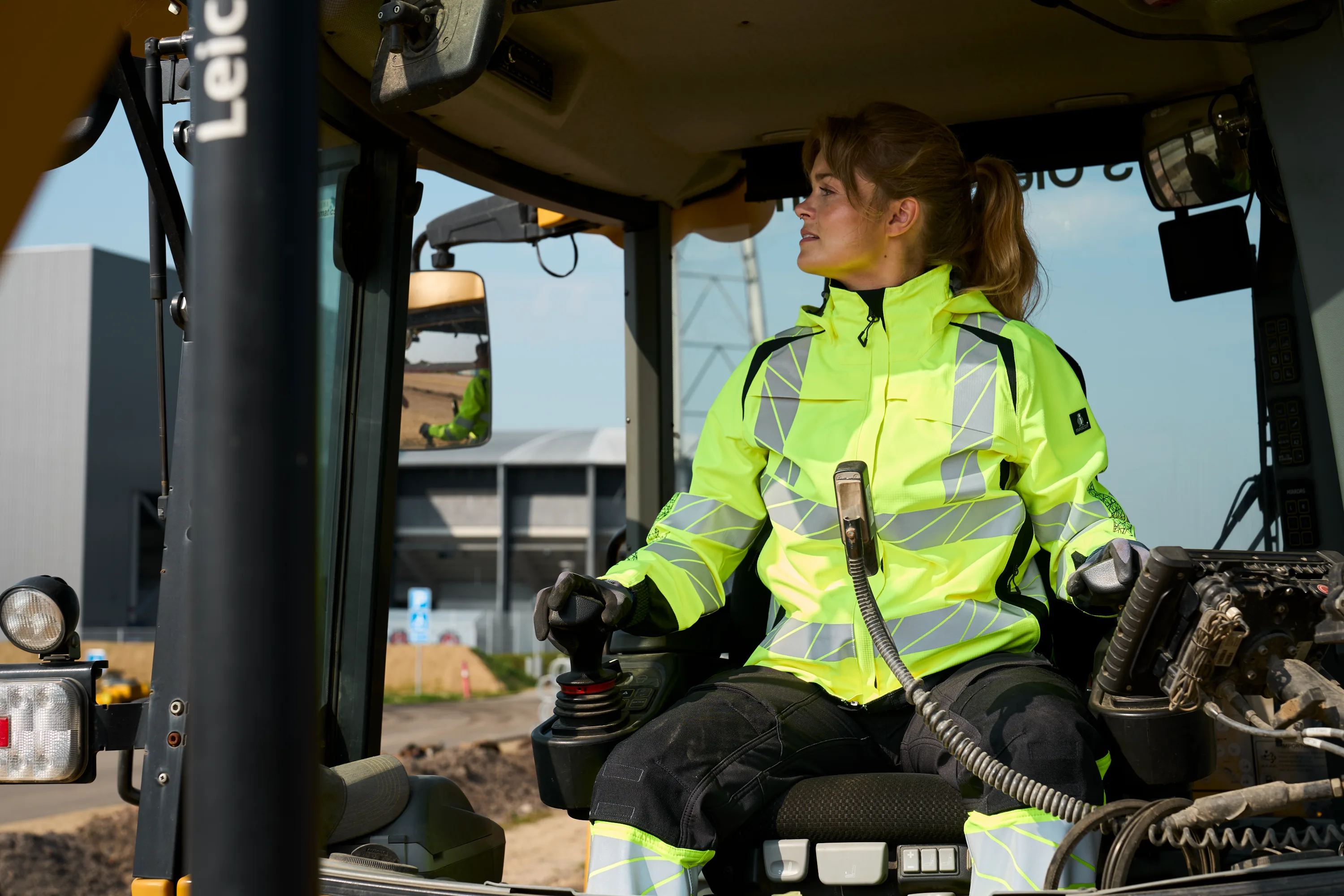
EN 17353 sets requirements for enhanced visibility and is designed to make the wearer visible in medium-risk work situations. Workwear certified to EN 17353 is suitable for users who need to be visible at work where clothing certified to EN ISO 20471 is not required. The clothing is divided into three visibility types – Type A, Type B and Type AB – depending on whether it provides visibility in daylight and/or when lit by vehicle headlights or floodlights in the dark.

EN 342 - Protection against cold
Products with EN 342 provide certified protection against cold. Each product is certified in classes that describe its insulation value, air permeability and, where relevant, water resistance. The insulation value is given in clo. The higher the clo value, the better the insulation. You can find the clo value on the product page on the MASCOT website. Air permeability is shown with the letters AP and given in class 1–3, where 3 is the highest class. If the product is waterproof, this is shown with WP to the right of the symbol.
EN 343/EN ISO 24232 - Protection against rain
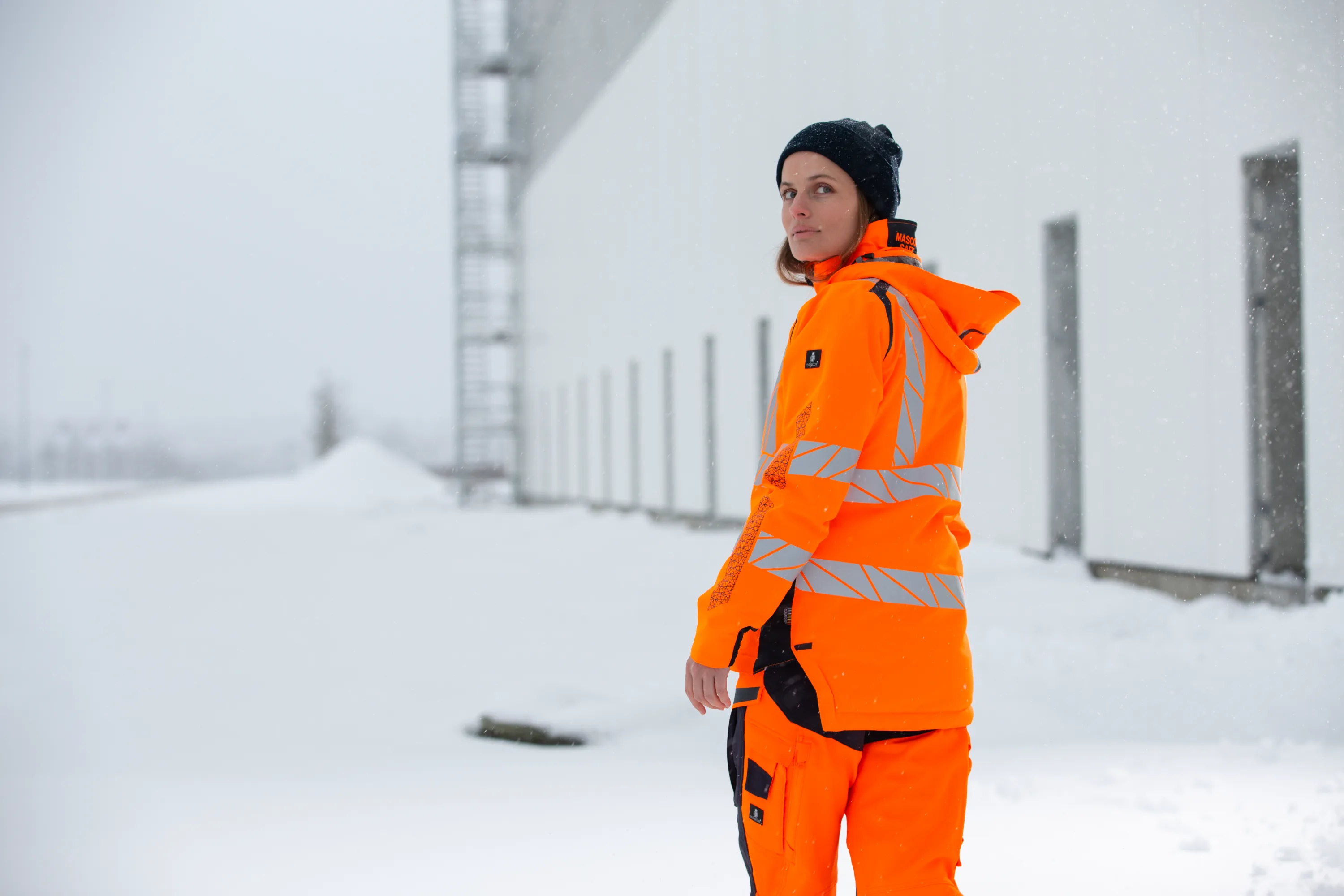
Products certified to EN 343/EN ISO 24232 protect the wearer against rain. They are tested for water resistance and breathability across the complete garment. The certification has three values: the product's water resistance, its breathability, and whether the finished garment has been tested under rain conditions. The first two values are graded in classes 1–4, where 4 is the highest class. The last value is shown as either R or X, where R means that the garment has been tested.
EN ISO 11611 - Protection for welding
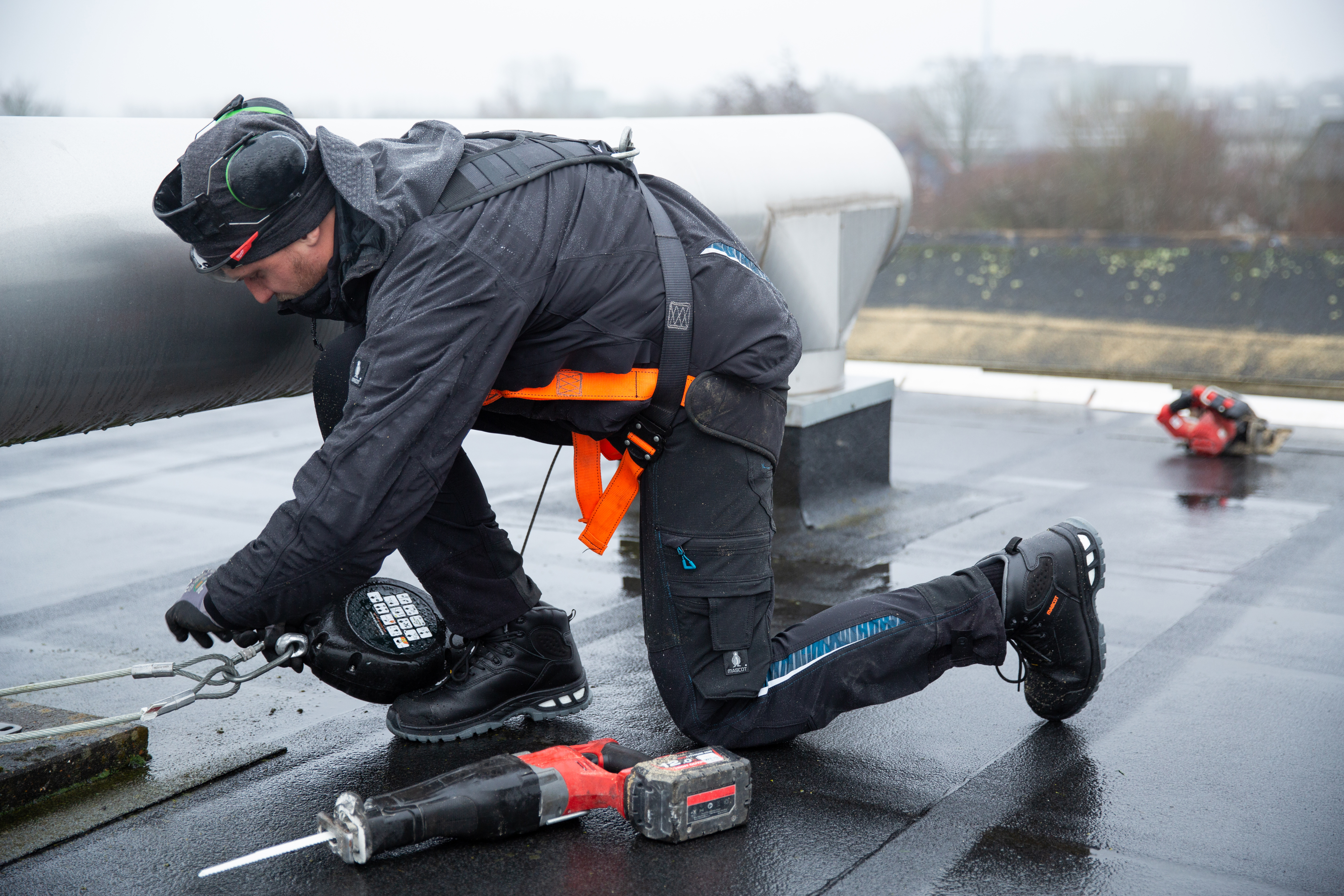
EN ISO 11611 sets the minimum requirements for workwear that protects the wearer during short-term welding and allied processes with comparable risks. The standard covers clothing that protects against spatter (small drops of molten metal) and brief contact with flame and radiant heat from an electric arc. The standard has two protection classes. Class 1 protects during less hazardous welding work, while class 2 protects during more hazardous welding work. For optimal protection, the clothing must cover the whole body. This is achieved by wearing trousers together with an overlapping jacket.
EN ISO 11612 - Protection against heat and flame
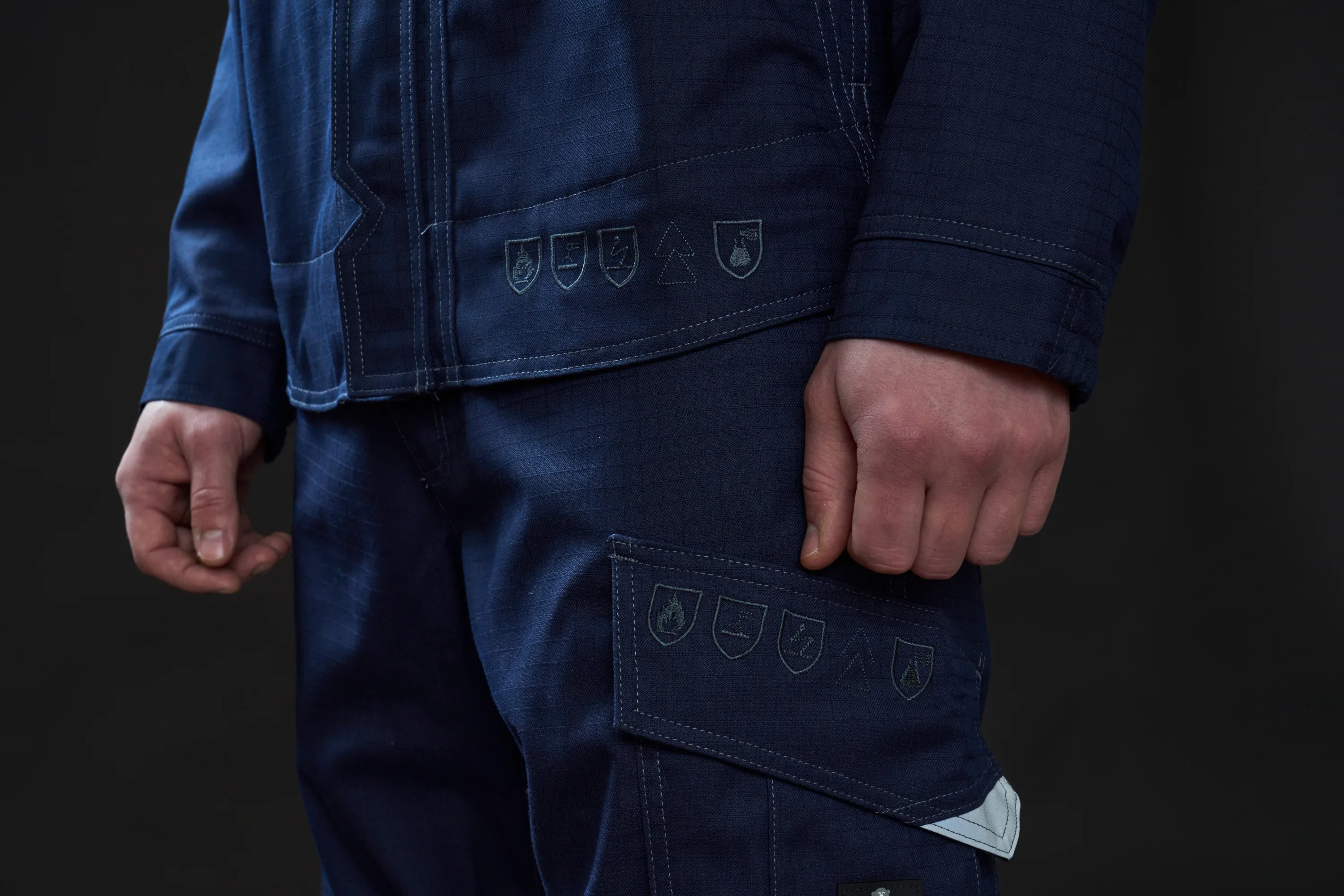
Workwear certified to EN ISO 11612 is made from materials that protect the wearer against exposure to heat and flame. The standard covers brief contact with flame, contact heat and splashes of molten metal. Jackets and trousers, or alternatively coveralls, must be worn together and overlap. EN ISO 11612 uses the code letters A to F. Each letter shows which type of heat or flame exposure the clothing has been tested against, and the number shows the protection level. The higher the number, the better the protection.
EN ISO 14116 - Protection against heat and flame
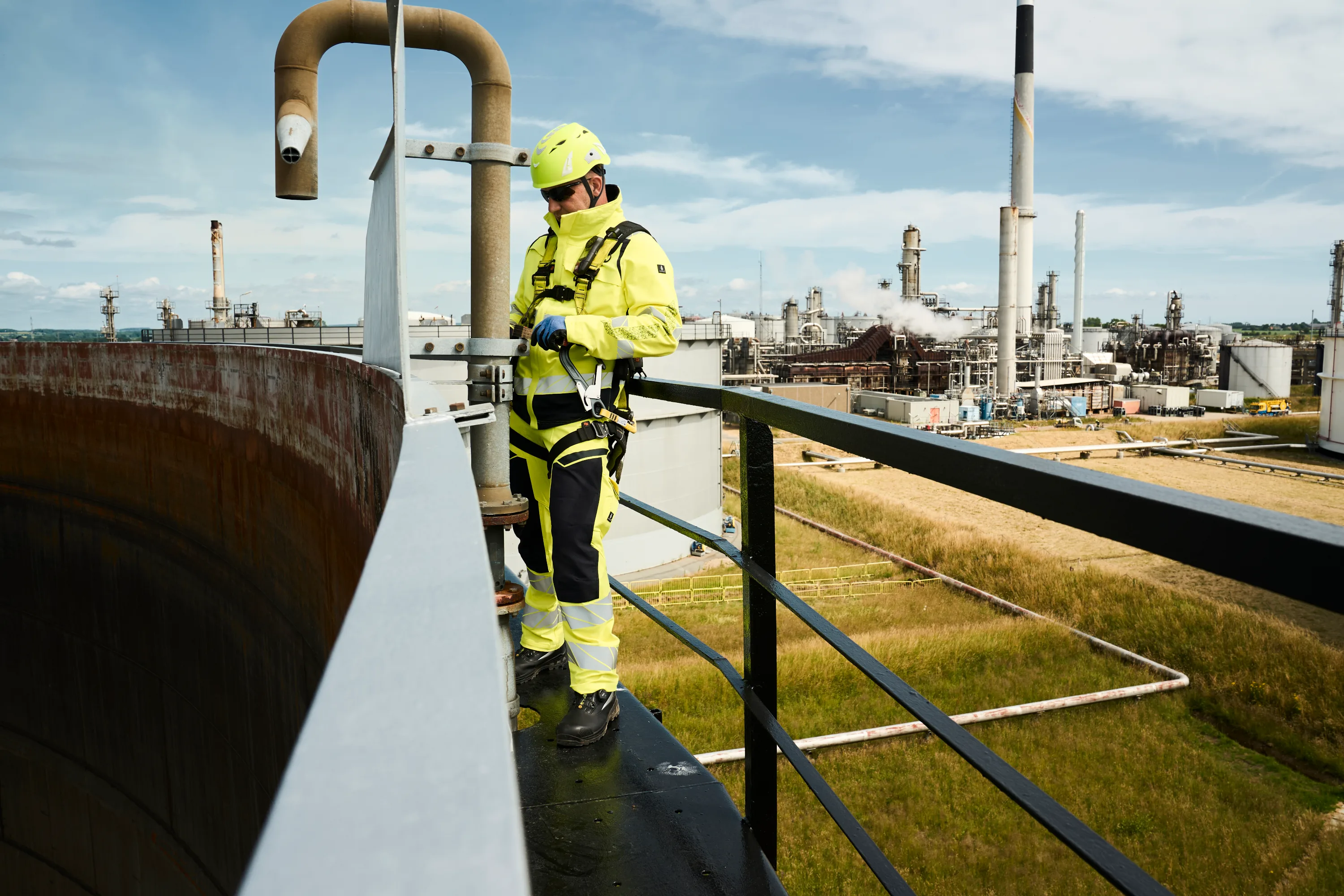
EN ISO 14116 sets requirements for materials, material combinations and clothing with limited flame spread. The aim of the certification is to reduce the risk of the clothing burning and becoming a hazard to the wearer. EN ISO 14116 is used where some protection against accidental flames is needed, but the risk of exposure to intense heat or flame is lower. The standard is divided into index 1–3, with index 3 providing the highest protection.

EN 61482-2 - Protection against electric arc
EN 61482-2 is a standard for protective clothing that protects the wearer against the thermal hazards of an electric arc. The standard includes two test methods. The open arc test (EN IEC 61482-1-1) shows how well products protect against thermal energy from an arc and can be expressed in three values: ELIM, ATPV and EBT. For all three, the higher the value, the better the protection. The box test (EN 61482-1-2) simulates an arc in an enclosed box and classifies the clothing as APC1 or APC2, where APC2 is the highest protection.
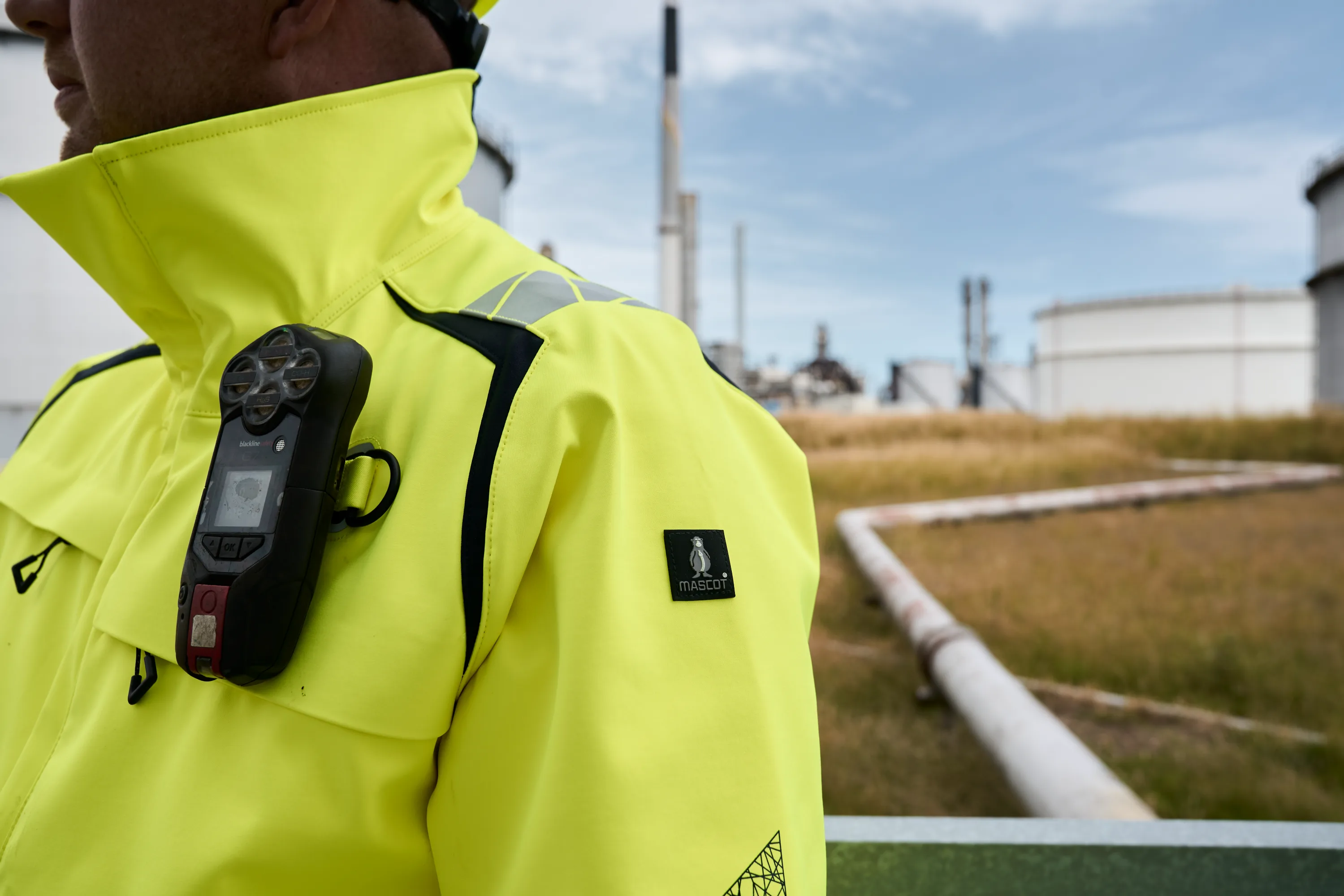
EN 1149-5 - Protective clothing with electrostatic properties
EN 1149-5 (tested to EN 1149-3) sets out the requirements for protective clothing with electrostatic properties. It specifies material and design requirements for clothing that reduces the risk of electrostatic charge and discharge, which is essential in explosive atmospheres. The effect does, however, depend on the wearer being earthed, for example by wearing conductive footwear.
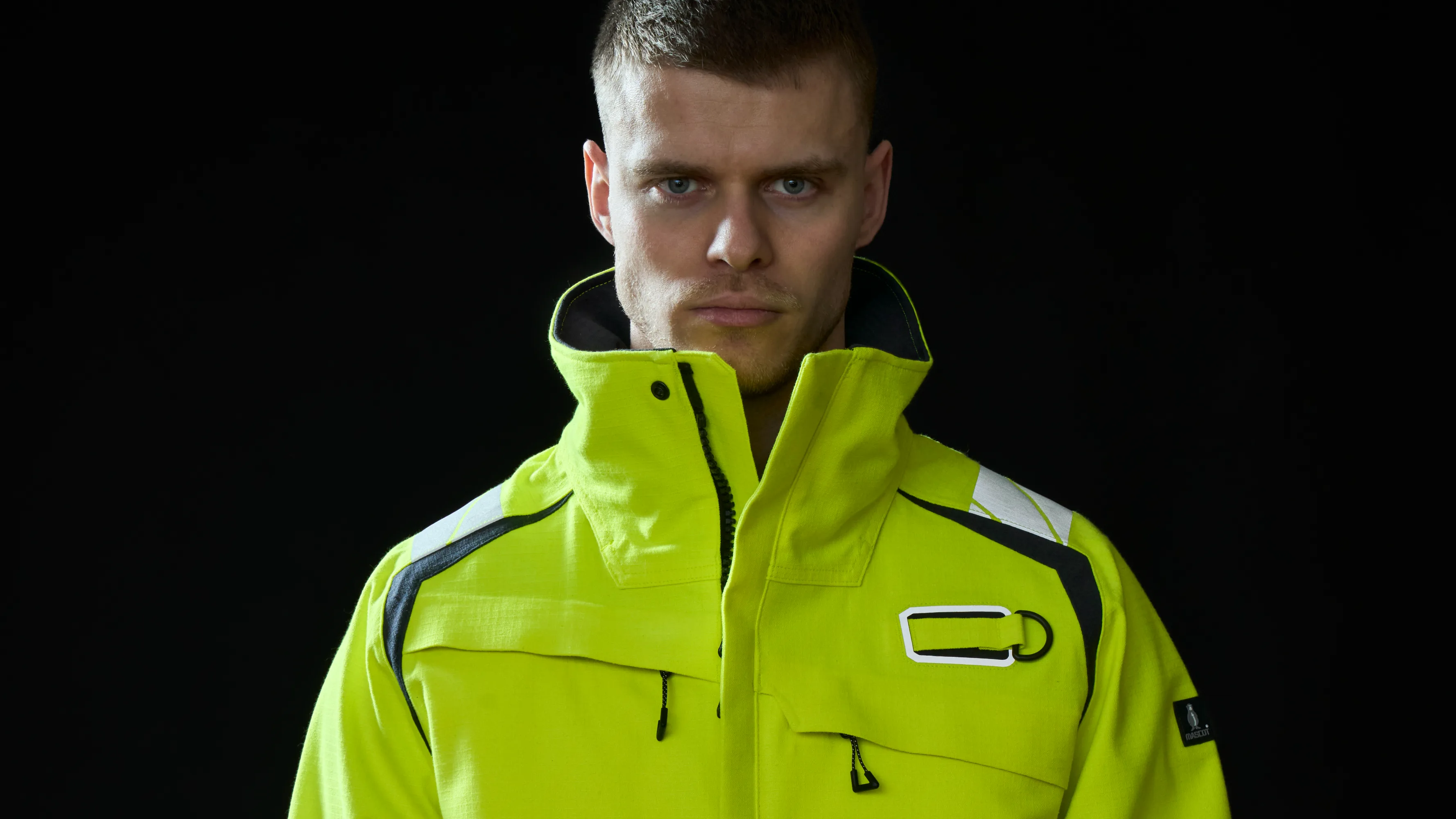
EN 13034 (Type 6) - Protective clothing against liquid chemicals
EN 13034 is a standard that sets the requirements for protective clothing offering limited protection against chemicals. The clothing is intended for situations where the risk of exposure to chemicals is limited and brief. EN 13034 includes two test methods: Type PB [6] indicates partial body protection, meaning that jackets and trousers are tested as separate items. Type 6 indicates full body protection, meaning that products are tested and certified together as a complete set to provide full protection against chemicals.

HACCP DIN 10524 – requirements for workwear used in the food industry
Within the EU, companies that handle food must work according to HACCP principles. HACCP stands for Hazard Analysis and Critical Control Points. It is a standardised method for analysing and controlling safety risks in food production.
Certification to DIN 10524 covers specific requirements for the design, function and fabric of workwear used in the food industry.

EN 13758-2 UPF 40+ - Protective properties against UV radiation
EN 13758-2 UPF 40+ sets requirements for protection against the sun's harmful UVA and UVB rays. Products are labelled with an Ultraviolet Protection Factor (UPF) according to their protective ability. To be certified, a product must have a UPF of 40 or more. All products that meet the requirements are labelled UPF 40+, even if their actual UPF is higher.

EN ISO 13688 - General requirements for protective clothing
EN ISO 13688 sets general requirements for ergonomics, ageing, sizing and marking of protective clothing, and for the information supplied by the manufacturer. EN ISO 13688 can only be used in combination with other protective clothing standards that set the specific requirements for protection against different risks.
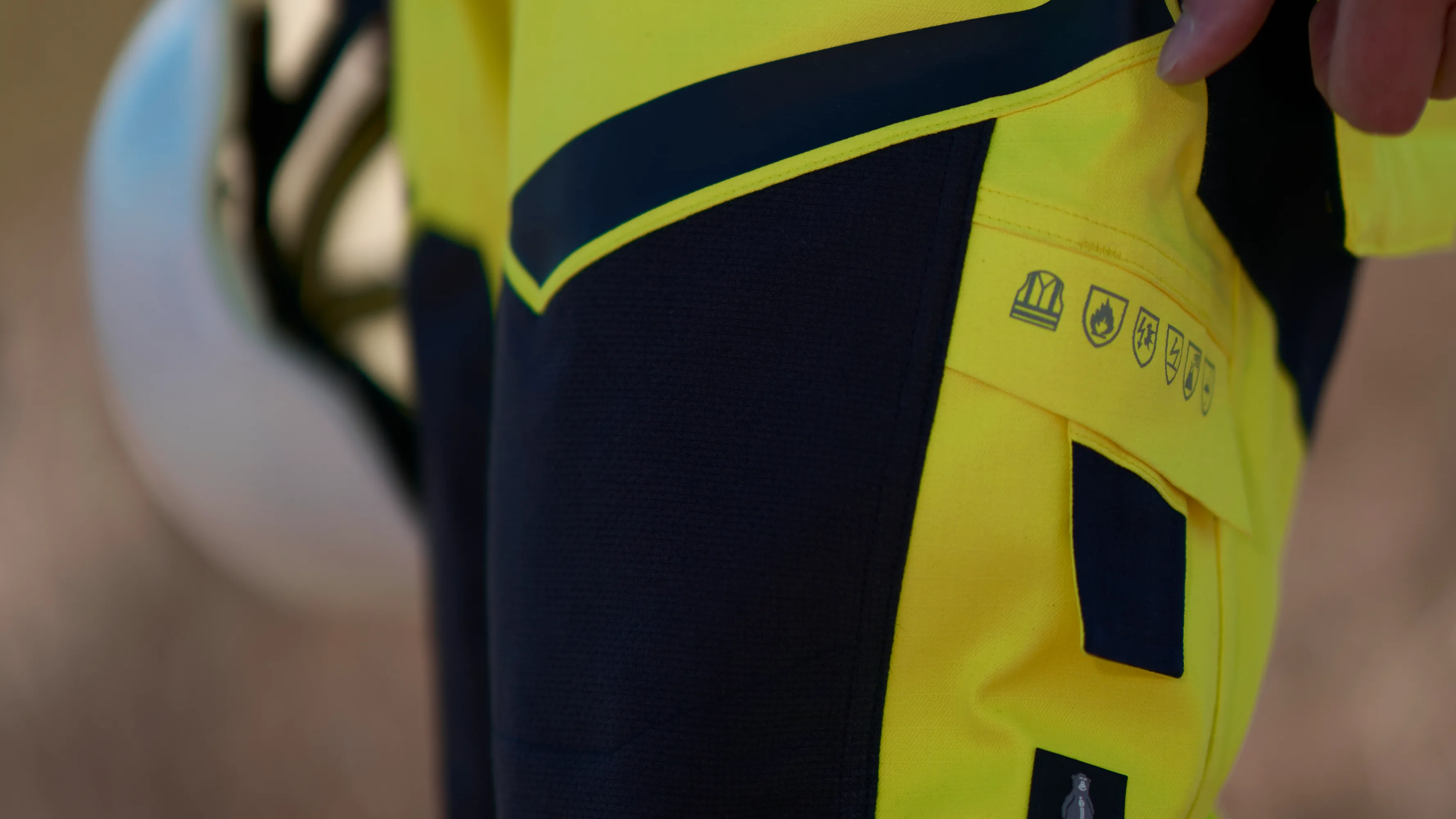
EN ISO 14404-3:2024 - Kneepads for work in a kneeling position
The EN ISO 14404-3:2024 standard sets requirements for knee protectors for work in a kneeling position. Kneepads are divided into types 1–4 depending on their design and use, with type 2 covering kneepads tested in combination with clothing. The standard also divides kneepads into four performance levels, which indicate the degree of protection against pressure and penetration on different types of surface.

Safety footwear
MASCOT safety footwear is light, flexible and comfortable – and gives you the protection you need. Our safety shoes, boots and sandals are all approved to the European standard EN ISO 20345. Whatever environment you work in, our range includes safety footwear that meets the safety requirements and keeps you comfortable throughout the working day.
EN ISO 20345
EN ISO 20345 is a European standard for safety footwear that ensures safety shoes, boots and sandals meet the requirements for work in areas where safety is a high priority. All MASCOT® FOOTWEAR safety footwear is certified to EN ISO 20345.

EN ISO 20347
EN ISO 20347 is a European standard for occupational footwear without a protective toe cap. It covers footwear with certified slip-resistant, shock-absorbing, breathable and stabilising properties. The MASCOT range includes footwear certified to EN ISO 20347 with the highest slip resistance rating, SRC.
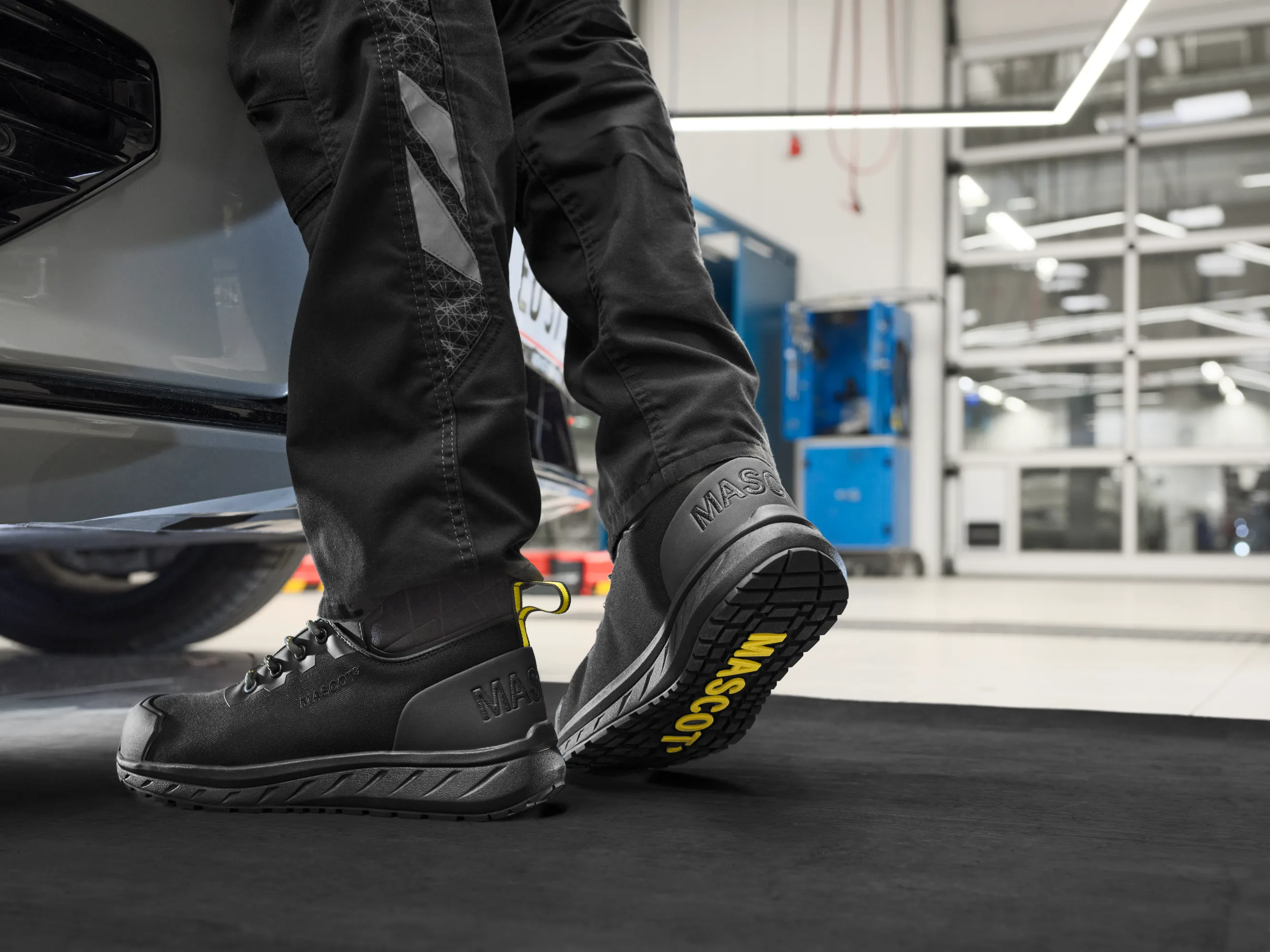
Electrostatic discharge
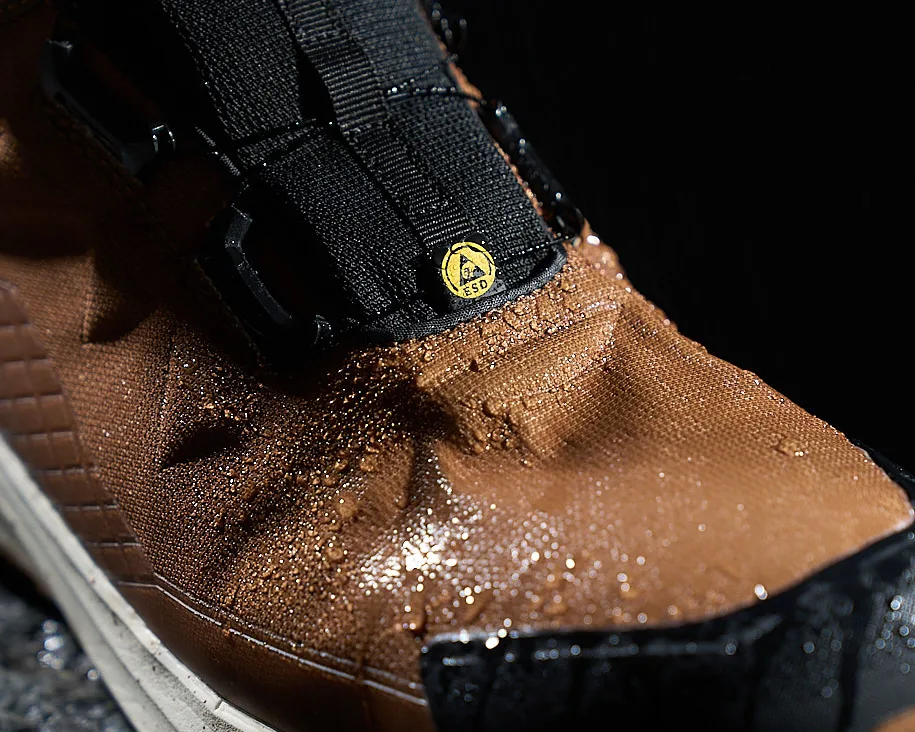
ESD approved footwear protects the products handled by the wearer against static electricity. In some trades, certain areas must be ESD-protected to safeguard electrical components and equipment.