ENVIRONMENTAL RESPONSIBILITY
As a manufacturer of workwear and safety footwear, we at MASCOT are aware that we operate in an industry with a relatively large environmental footprint. It is difficult to avoid completely, but we can make an effort to minimise that footprint.
We have a responsibility to reduce the environmental footprint we leave, and it is a responsibility we are happy to take on. Taking responsibility and behaving in a proper manner is part of our DNA.
That is why it goes without saying that we want to develop, produce and market products that are not only made under good, decent employment conditions, but are also produced with the fewest possible resources and the lowest overall environmental footprint.
WE WANT TO REDUCE OUR OVERALL FOOTPRINT
At MASCOT, we take a holistic approach to environmental responsibility. We believe that our efforts must cover all our products and all our processes if we are to reduce our overall environmental footprint.
In our work, we look for opportunities for optimisation throughout the production process, and we pay close attention to ensuring that reductions in one place do not have negative consequences elsewhere.
THE GOAL IS CIRCULAR PRODUCTION
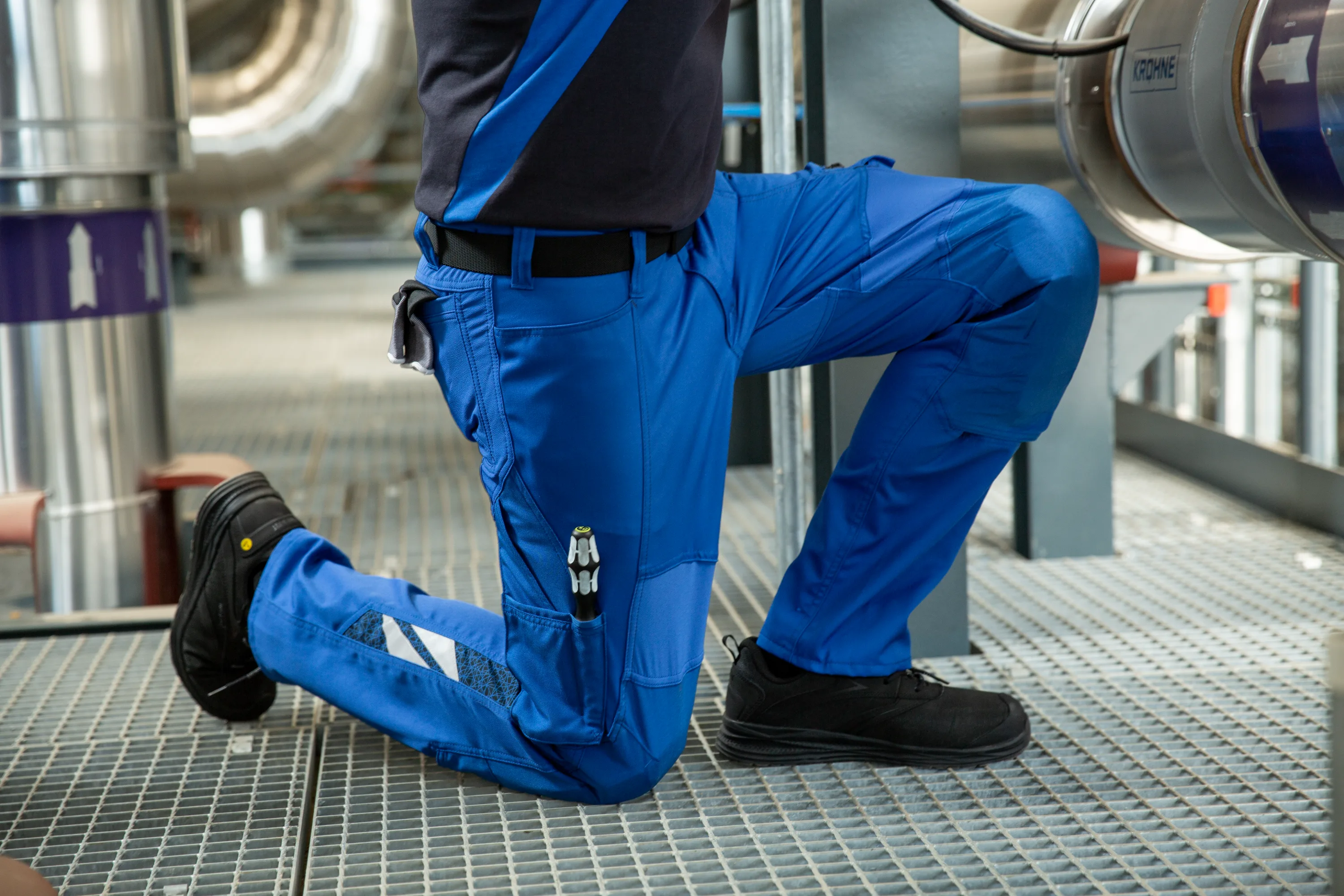
At MASCOT, we work purposefully to extend the lifetime of our products as much as possible. We also work towards a goal of our products containing the largest possible share of recycled materials. But only where the recycled materials last just as well as the ones they replace.
We took an important step in 2022 with the launch of MASCOT® CUSTOMIZED. The series is developed with new fabrics containing a high share of recycled fibres, including recycled polyamide made from surplus material from textile production.
LIFE CYCLE ASSESSMENTS
We use life cycle assessments to find out where reductions can really be achieved. When we switched to recycled polyester in a couple of our MASCOT® ACCELERATE trouser models, CO₂ emissions from raw material to factory gate fell by 18.2%.
MASCOT RE-worked®
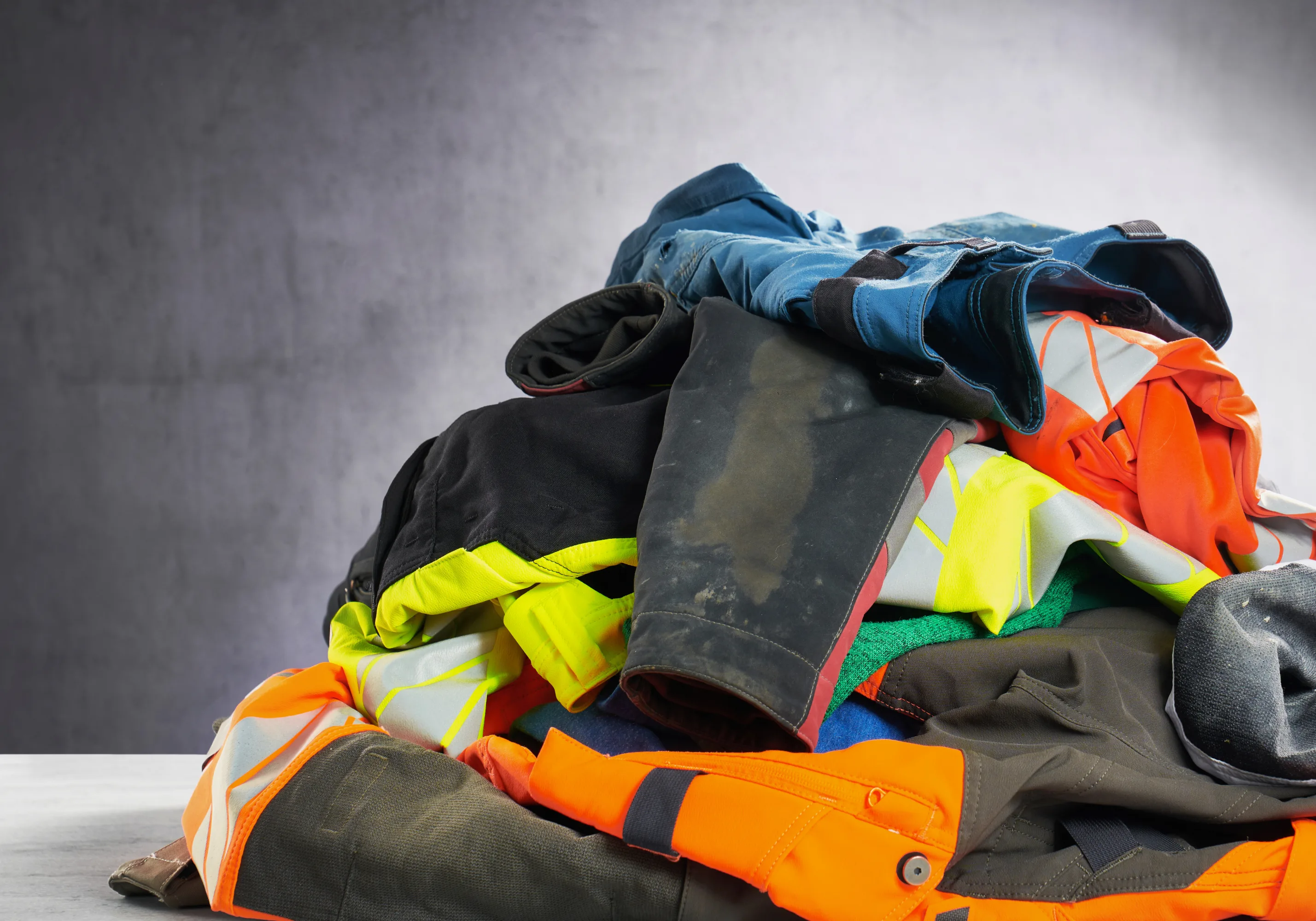
With our take-back solution, companies can collect their worn-out MASCOT workwear and send it for recycling instead of throwing it away.
CLIMATE AND ENERGY
Our near-term climate targets towards 2034 have been validated by the Science Based Targets initiative (SBTi), and durability is our most important climate measure.

CHEMICALS AND PRODUCT SAFETY
All materials we have purchased since 2023 are PFAS-free, and we document chemical safety through OEKO-TEX®, REACH and independent testing.
WATER, WASTE AND CHEMICALS IN OUR OWN OPERATIONS
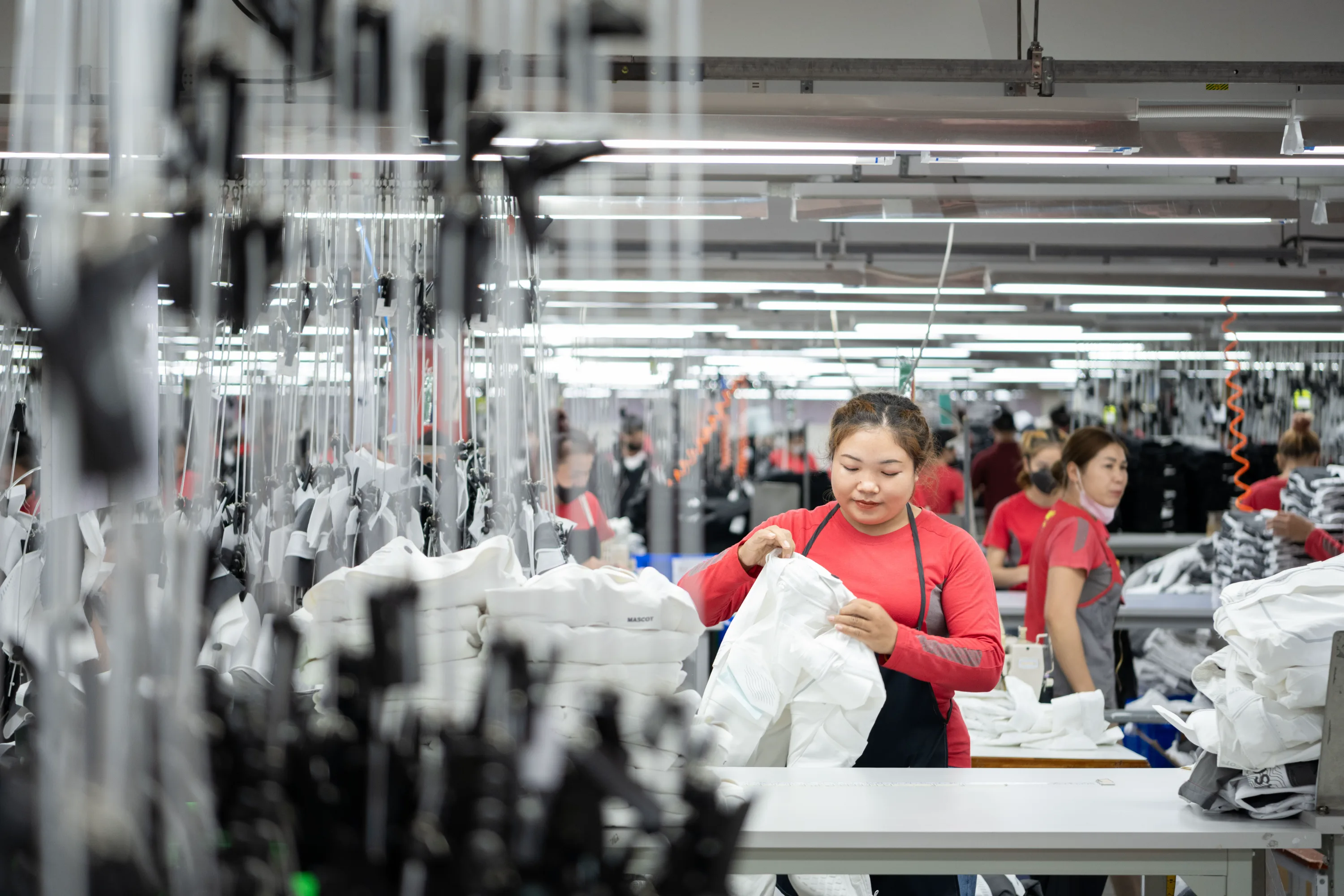
MASCOT's factories in Vietnam and Laos comply with all applicable environmental requirements set by the authorities and by the industrial zones in which the factories are located. We also meet the environmental aspects of SA8000, and our internal environmental policy is based on relevant documents on occupational safety, environmental management and environmental impact.
The environmental policy applies to all our own production sites, subsidiaries and products and is part of our environmental management system, which has been ISO 14001-certified since 2023.
AUTHORITIES AND REGULATION
The environmental authorities in Vietnam and Laos set detailed requirements for areas such as waste management, environmental monitoring and water consumption.
These requirements are – as a minimum – met in full at all our own factories.
INDUSTRIAL ZONES AND WASTEWATER
MASCOT's factories are located in approved industrial zones that have their own environmental and waste policies. Wastewater is treated centrally here and monitored by the environmental authorities through quarterly inspections.
We continuously measure and report both wastewater volume and water consumption. We also analyse the quality of both clean water and wastewater and compare the results with local requirements.
WATER CONSUMPTION AND WATER RISK
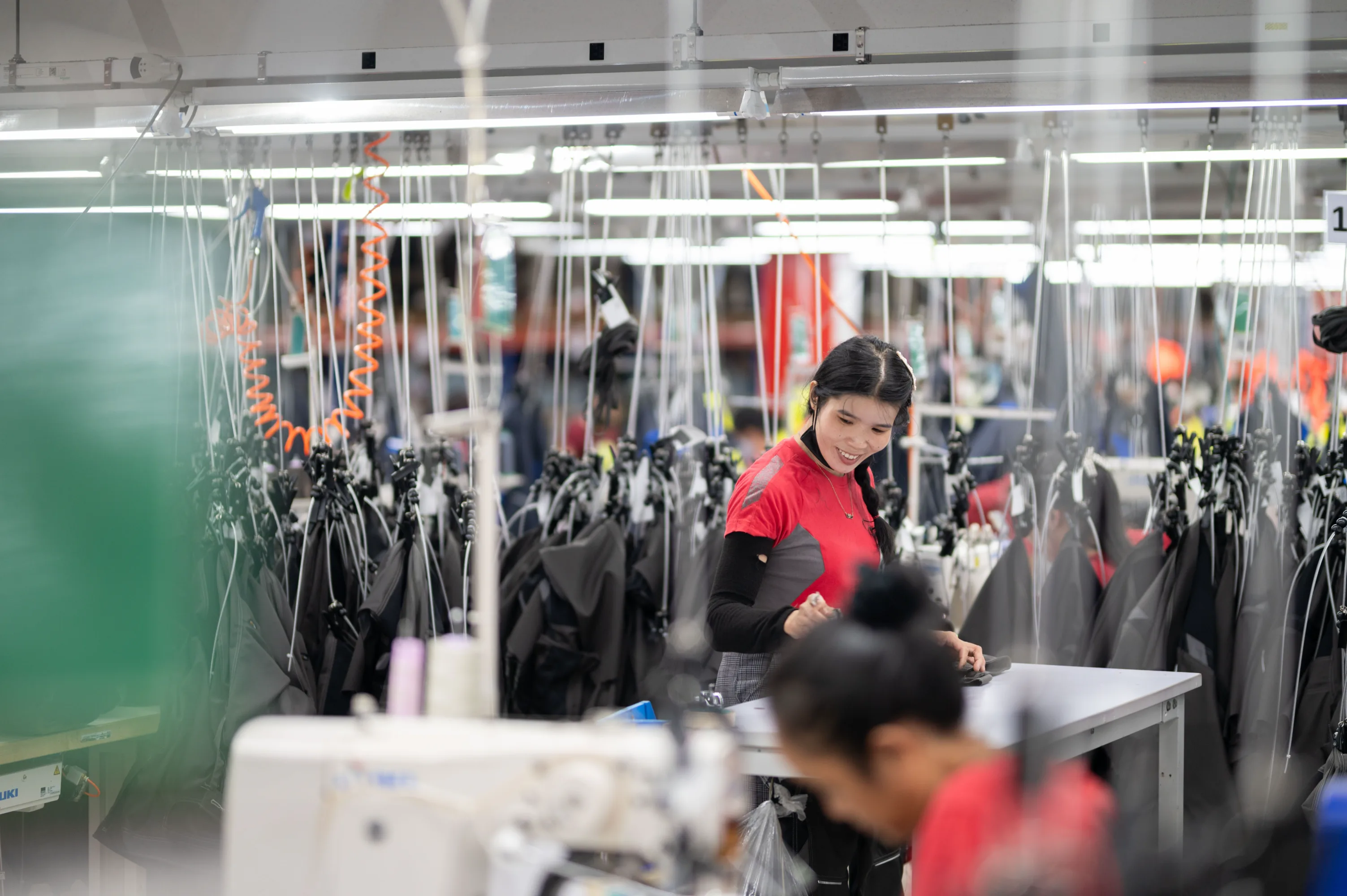
We do not dye fabrics and have no major wet processes at our own factories, so our own production is not among the most water-intensive stages of the textile chain. However, a water risk analysis using the World Resources Institute's Aqueduct 4.0 tool showed a medium to high overall water risk at the factories in Vietnam and Laos due to local infrastructure, governance and climate conditions. That is why we focus our water efforts there.
In 2025, our net water consumption was 11,137 m³ – 23.2% lower than in 2024. Our target is to reduce water consumption per unit sold by 5% by 2034 compared with 2024.
WASTE MANAGEMENT AND RECYCLING
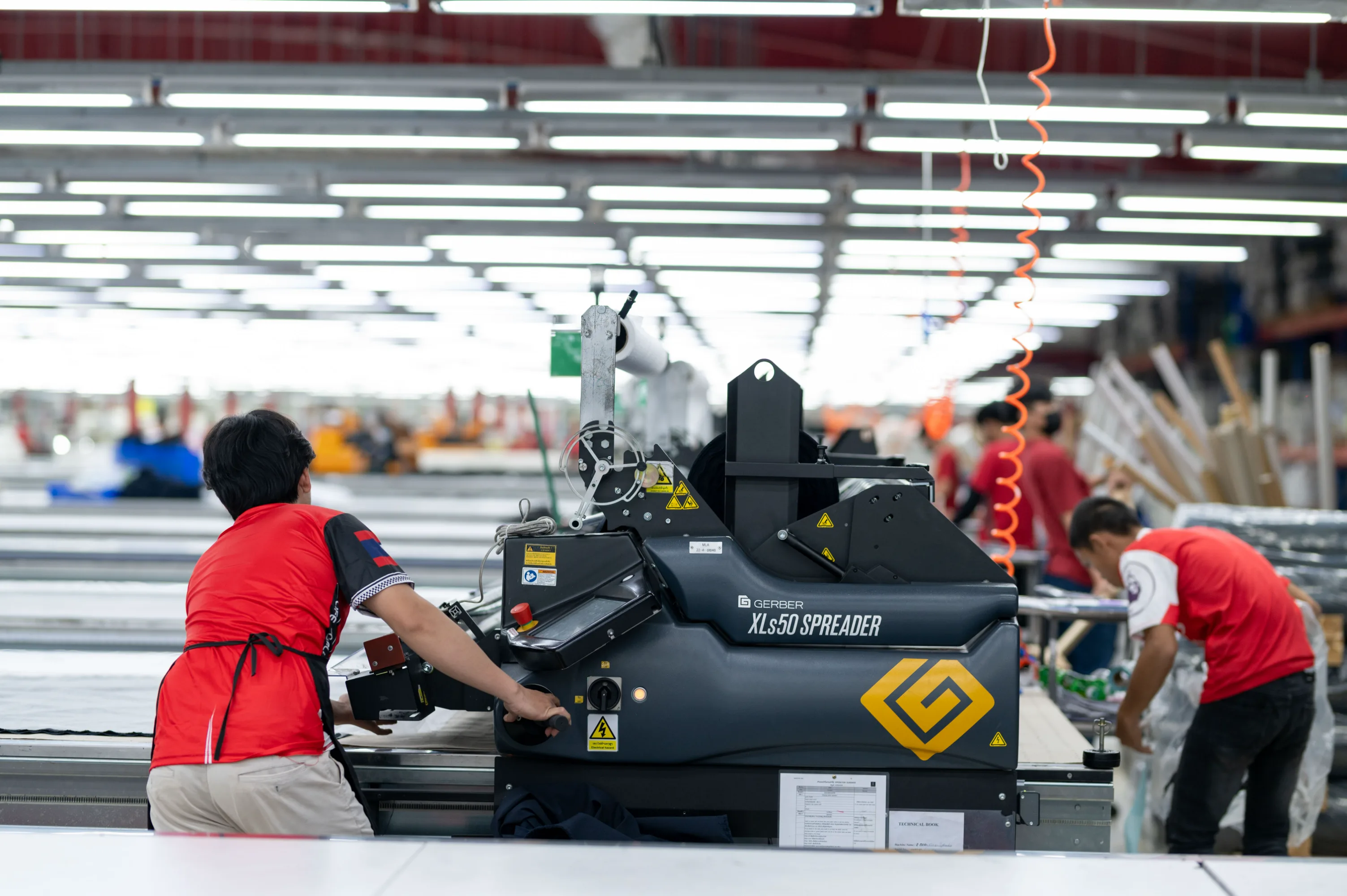
General waste is sorted into categories such as fabric, paper and wood and collected several times a week by certified waste management companies. Production also generates large quantities of fabric scraps, which are included in the local industrial zone's recycling system. In 2025, 86.3% of our waste was recycled, and only 0.03% went to landfill. Our goal is to maintain a sorting rate of 100%.
We also focus on material consumption. The textile scraps (cut-offs) generated in our own production are recycled through the official industrial zones where our factories are located. Here, the waste is handled centrally with a view to recycling.
The amount of hazardous waste is limited, but all hazardous waste is classified and handled according to strict procedures. Only trained staff have access to the containers, which are clearly labelled in both English and the local language. Handover to approved waste operators takes place under the supervision of MASCOT's safety representatives.
TRANSPORT AND PACKAGING
The journey from raw material to finished workwear involves transport across continents – which is why we at MASCOT focus on minimising the environmental impact along the way. We are also in close, ongoing dialogue with our packaging and transport suppliers to find new solutions that reduce the overall climate footprint.
Together with purchased goods and services, transport and distribution from our suppliers are covered by our SBTi-validated scope 3 targets. Combined, the two categories account for more than 67% of our total climate footprint.
TRANSPORT OF RAW MATERIALS
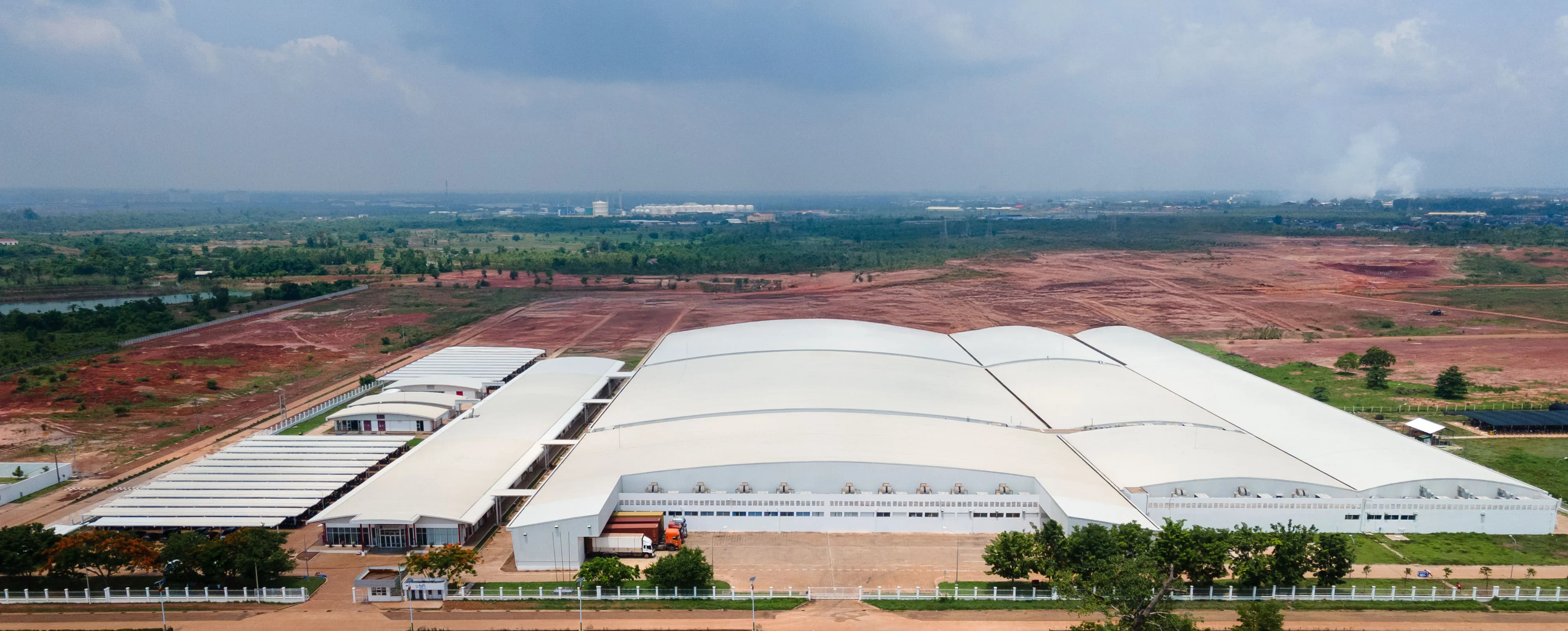
Our own factories are in a logistically advantageous location, close to many of the suppliers that produce buttons, zips and other components.
This means shorter transport distances for raw materials and the option to consolidate larger purchases, so we avoid repeated shipments of small deliveries.
TRANSPORT OF FINISHED GOODS
The finished workwear is shipped in 40-foot containers to our high-bay warehouse in Denmark. From there, it is distributed to customers throughout Europe. Sea freight has lower CO₂ emissions per unit than air freight, and we only work with large shipping companies that are in the process of converting their fleets from diesel to LNG.
All our main transport service providers are ISO 14001-certified.
PACKAGING WITH A FOCUS ON RECYCLING
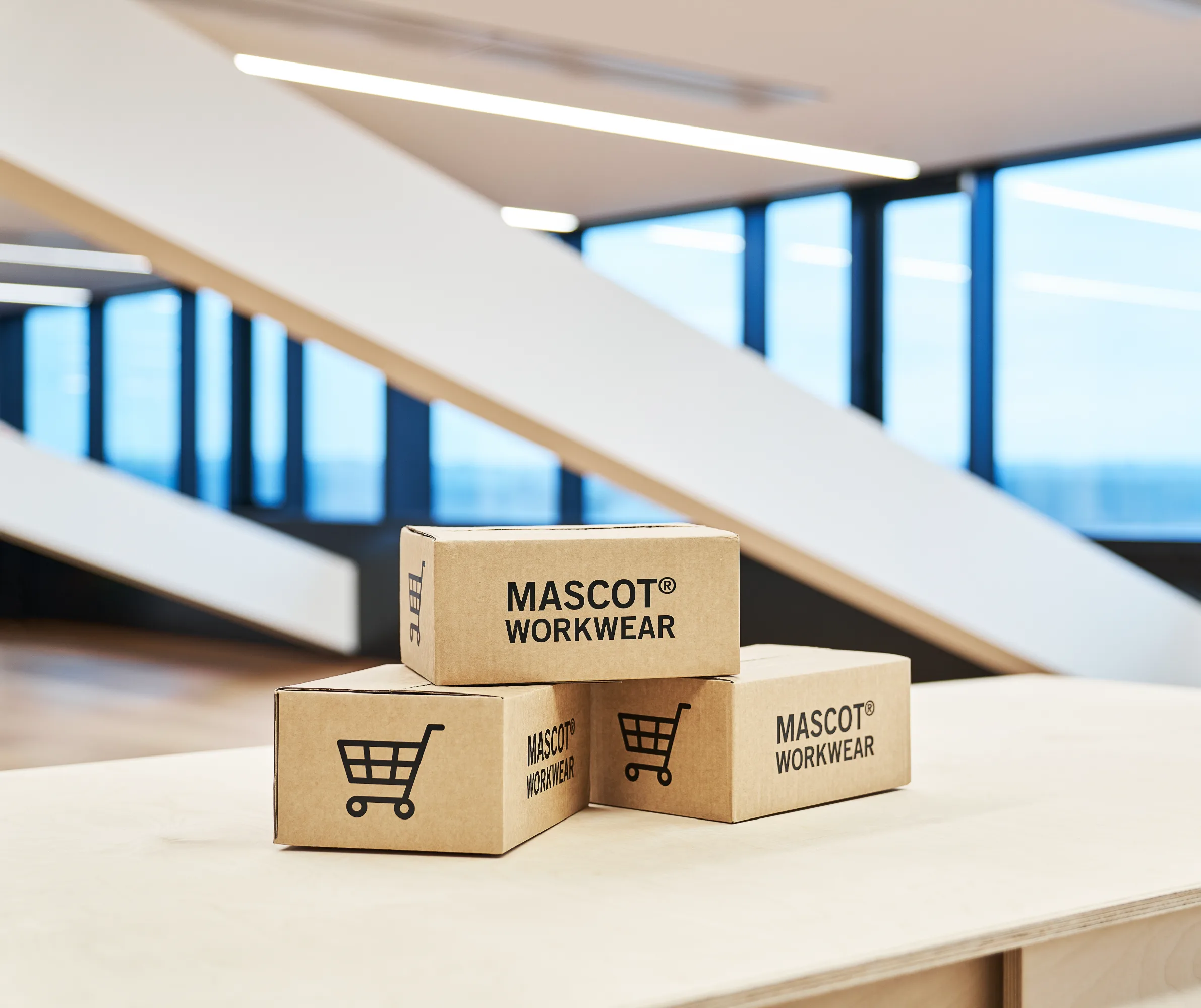
We only use cardboard boxes made from recycled material for packing at the factories. The boxes are filled optimally and reused in Denmark whenever possible.
The new boxes we use are made from 90% recycled materials and automatically adjust to the contents in height and volume, so we avoid shipping air.
PLASTIC BAGS MADE FROM RECYCLED MATERIAL
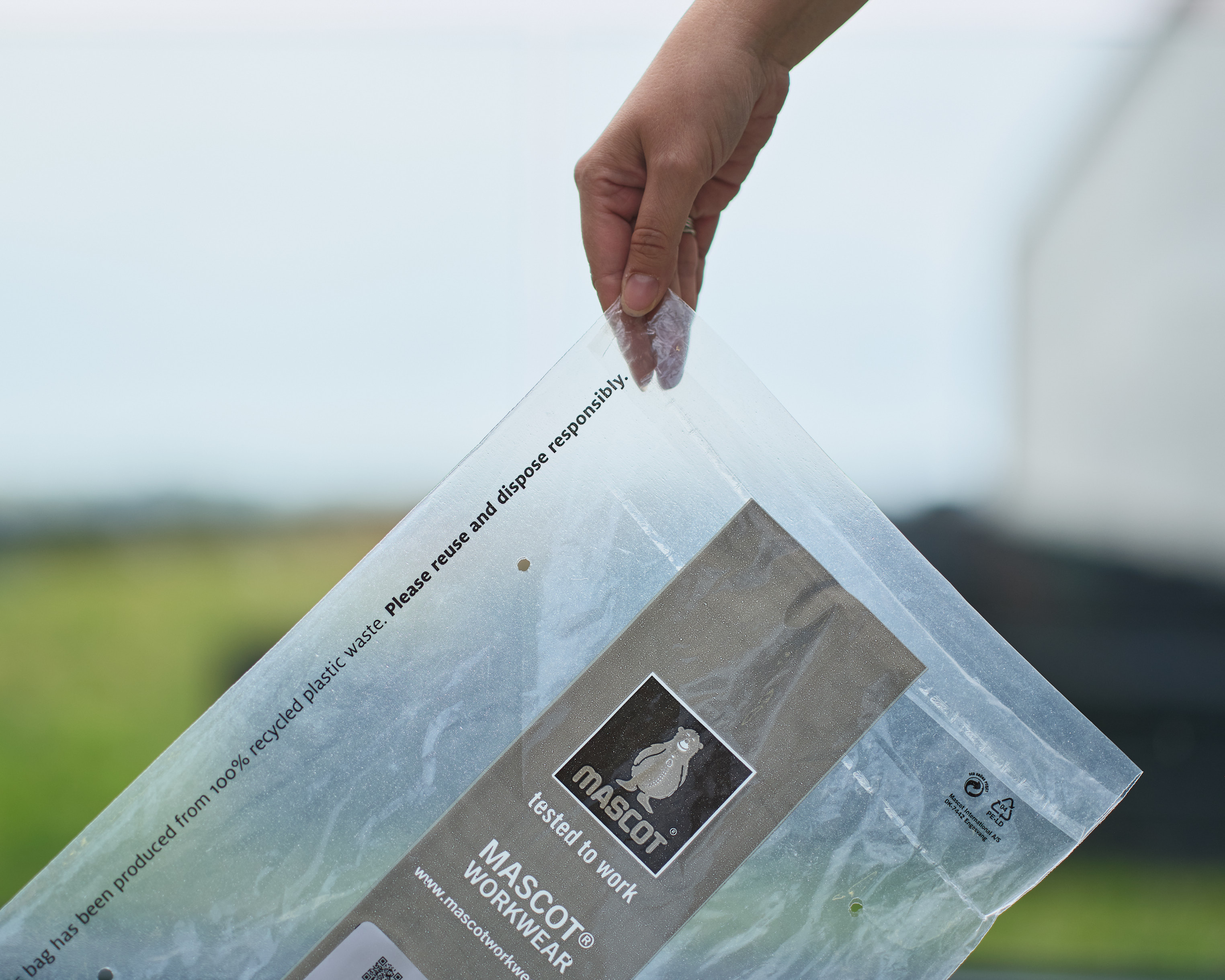
The workwear is packed in plastic bags to protect it during transport. For selected products, we use plastic bags made from recycled plastic from Bangladesh.
Bags and packaging for smaller orders are also made from 100% recycled materials.